In this article
- What does a UGC creator actually do?
- What do you need to start UGC?
- Your 30-day UGC plan at a glance
- Week 1: how do you choose a UGC niche?
- Week 2: what sample videos should you make?
- Week 3: how do you build a UGC portfolio and rate card?
- Week 4: where do you find your first UGC jobs?
- What mistakes should new UGC creators avoid?
- What comes after your first 30 days?
- Frequently asked questions
Your first 30 days as a UGC creator should produce four things: a clear niche, three to five sample videos, a simple portfolio and rate card, and your first round of pitches and applications. You do not need followers, an agency or expensive gear. You need a phone, good light and a repeatable process.
The timing is good. Brands are buying more user-generated content than ever. On Collabstr, UGC collaborations grew 133% in a year and now make up 35% of all campaigns, and half of the brands in Influencer Marketing Hub's 2026 survey plan to start or increase work with UGC creators. The competition is growing too, which is why a focused first month matters.
Here is a week-by-week plan, with what to film, what to charge and where to find your first paid jobs.
Key takeaways
- UGC creators make videos that brands post on their own accounts and in ads. Follower count does not matter.
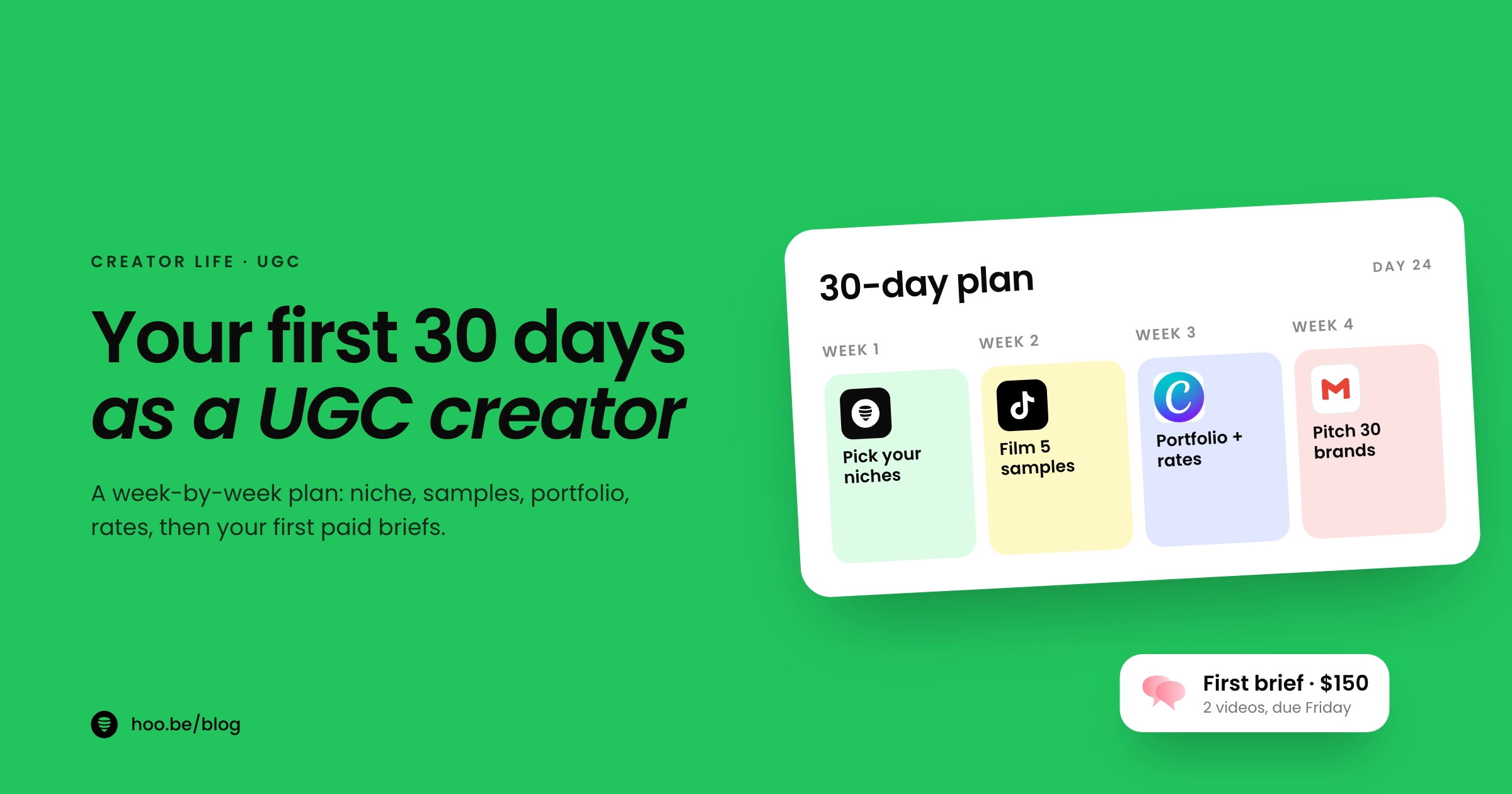
- Week 1: pick two or three niches and set up your business basics. Week 2: film three to five samples. Week 3: build your portfolio and rate card. Week 4: pitch and apply.
- Marketplaces like Billo pay less but bring steady briefs: from $30 for a 15-second video as a new creator.
- The average UGC collaboration on Collabstr paid $154 in its 2026 report, a useful benchmark for your first direct clients.
- Only make claims about products you have actually used. The FTC bans testimonials that misrepresent real experience.
What does a UGC creator actually do?
A UGC (user-generated content) creator makes short videos and photos that look and feel like real customer content, for a brand to use on its own channels. Think product demos, unboxings, "I tried this for a week" testimonials and quick tutorials. The brand posts them on its account, runs them as ads, or puts them on product pages.
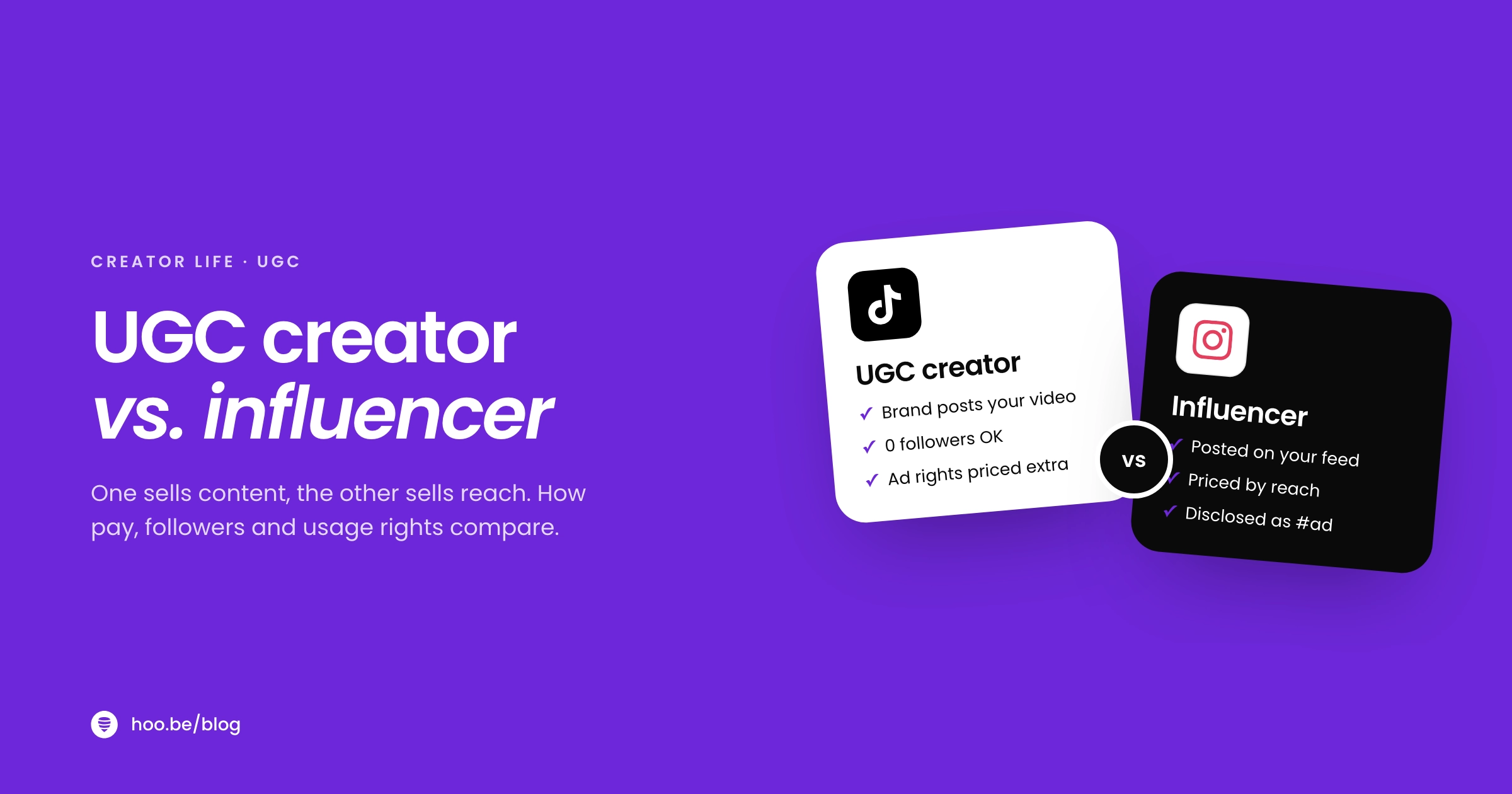
That is the big difference from being an influencer. An influencer is paid for their audience. A UGC creator is paid for their content. Billo, one of the largest UGC marketplaces, puts it plainly: follower count is irrelevant. Our UGC creator vs influencer guide goes deeper on the difference.
What do you need to start UGC?
Less than you think. Brands want content that feels native to TikTok and Instagram, which means phone-shot, natural and clear. Here is a lean starter kit.
| What | Why it matters | Start with |
|---|---|---|
| A recent smartphone | Shoots sharp vertical video, the format brands need | The phone you already own |
| Light | Clean, even light makes products look right | A window, facing it; add a ring or panel light later |
| Sound | Bad audio gets a video rejected faster than bad video | A quiet room; a small clip-on mic when you can |
| Tripod or phone stand | Steady shots and hands-free demos | Any phone tripod |
| Editing app | Cuts, captions and music | The editor inside  TikTok or  Instagram, or a free mobile editor |
| Business email and payment account | Brands and marketplaces need to reach and pay you | A dedicated work email and a PayPal or bank account |

Your 30-day UGC plan at a glance
Pick two or three niches, study real UGC ads in them, and set up your work email and payment account.
Film three to five sample videos in different formats, using products you already own.
Build a one-page portfolio, write your services list and set your first rates.
Apply on one or two marketplaces and send 20 to 30 personalized pitches to brands.
Week 1: how do you choose a UGC niche?
Pick two or three categories you genuinely use and understand: skincare, fitness, home, food, pets, tech, parenting, fashion. A focused starting point makes your samples and pitches clearer. You can widen later.
Good niches for beginners have three things in common: lots of brands selling online, products you can film at home, and a problem you can show being solved on camera. A skincare routine, a kitchen gadget or a pet product all fit. Something you would need a studio or a car showroom to film does not.
Study what already works
Spend an hour a day this week watching real UGC ads in your niches. Brands run their creator videos as ads, so you will see plenty of them in your own feed. Note the hooks in the first three seconds, how long each video is, how the product is shown and how the video ends. You are building a swipe file of formats, not copying anyone's script.
Set up your business basics
- A work email with your name, not a nickname.
- A payment account. Billo, for example, pays creators via PayPal.
- A simple tracking sheet: brand, contact, date pitched, reply, next step.
- A folder system for raw clips, edits and final files, named by brand and date.
Week 2: what sample videos should you make?
Film three to five short videos with products you already own. The goal is to show range and quality, not to wait for the perfect gear. Each sample should be 15 to 45 seconds, vertical, with captions.
| Format | What it shows a brand | Structure |
|---|---|---|
| Product demo | You can show a product clearly | Hook, 3 features in use, result |
| Problem and solution | You understand why people buy | The pain, the product, the after |
| Testimonial | You are convincing on camera | Talk to camera about your real experience |
| Unboxing | You can make packaging feel exciting | Reveal, first impressions, first use |
| How-to or tutorial | You can teach in seconds | Steps on screen, voiceover, end result |
Pro tip
Write three different hooks for one of your samples and film them all. Brands test openings constantly, and showing you understand that (and can deliver variations) makes you look like a pro in your first pitch.
Keep it honest from day one
The FTC's rule on fake reviews and testimonials, finalized in 2024, bans testimonials that misrepresent the experience of the person giving them, or that come from someone with no real experience of the product. Its influencer guidance says the same in plain words: do not talk about your experience with a product you have not tried. So for testimonial-style samples, use products you actually use, and say what is true.

Week 3: how do you build a UGC portfolio and rate card?
Put your best samples, your niches, your services and your contact details in one place a brand can open in a tap. Big attachments and cloud folders get ignored. A single link gets watched.
Your portfolio needs five things:
- A one-line intro. "UGC creator for skincare and home brands. Natural, phone-shot videos that look native to TikTok and Reels."
- Your 3 to 5 best videos, playable on the page.
- Services. Video lengths, hooks, raw footage, scripting, and whether you offer paid usage and whitelisting.
- "Starting at" pricing or a note that you quote per project.
- Contact. Business email and an inquiry form.
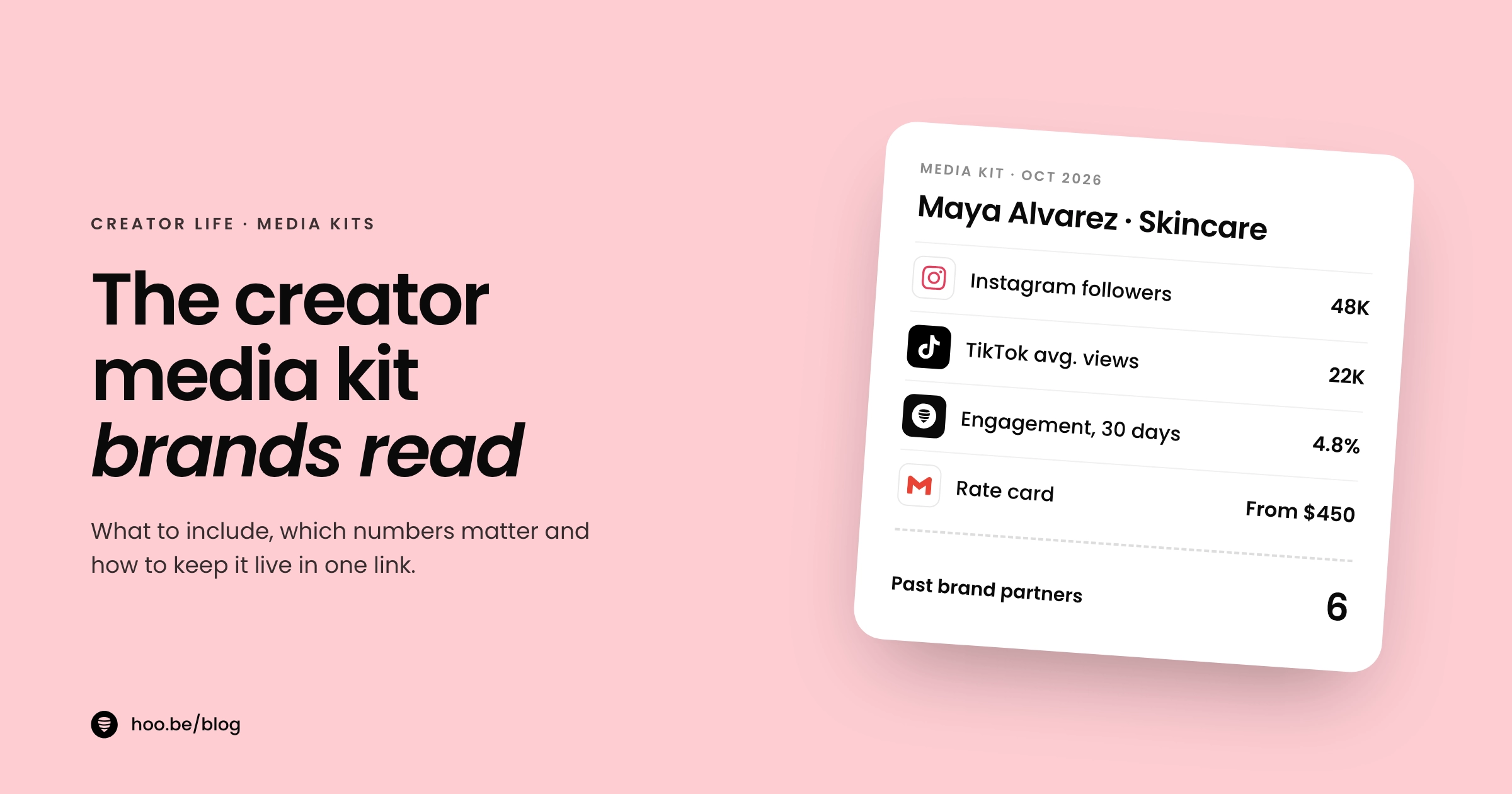
For layout ideas, see how to turn your link in bio into a creator portfolio and our media kit guide.
Set your first rates
Start from market data. The average UGC collaboration on Collabstr paid $154 in its 2026 report, and about 80% of brand answers on UGC creator pricing in Influencer Marketing Hub's 2026 survey were under $500. On marketplaces the platform sets the rate: Billo's base payout for a 15-second video starts at $30 for new creators and $70 for premium creators, rising with length and add-ons.
A practical starting point for your first direct clients is a base rate near that $154 average, with hooks, raw footage and paid usage priced as add-ons. Our full UGC rates guide breaks down each line item.
Week 4: where do you find your first UGC jobs?
Run two tracks at once: marketplaces for quick, steady work and direct outreach for better-paid clients.
Track 1: apply on a marketplace
Marketplaces bring the brands to you. On Billo, each task has a set payout you see before applying, the brand approves your video within three business days or it is approved automatically, and creators are paid twice a month. Billo says its creators earn about $500 a month on average. On Collabstr, you list your own packages and prices for brands to book. Pick one or two platforms and apply to everything that fits your niches.
Track 2: pitch brands directly
- List 30 brands that fit. Products you use, that sell online and already run creator-style ads.
- Find the right person. Look for titles like content, social, growth or creator partnerships manager.
- Write a short, specific pitch. One line on why their product, one content idea, and your portfolio link.
- Attach nothing heavy. Link your portfolio. Offer a full sample on request.
- Track and follow up once. Log every pitch, and follow up after five to seven days.
- Learn from replies. If several brands ask the same question, answer it in your next pitch.
Our brand pitch email templates give you wording to start from.

What mistakes should new UGC creators avoid?
- Giving away usage rights. A brand running your video as a paid ad is worth more than organic use. Price it separately.
- Working without a written scope. Agree deliverables, revisions, deadlines, usage and payment before you film.
- Unlimited revisions. Include one round. Charge for more.
- Waiting for perfect gear. Window light and a steady phone beat an expensive camera you are still learning.
- Pitching everyone. Thirty targeted pitches beat three hundred copy-pasted ones.
- Ignoring tax. In the US, UGC income is self-employment income. The IRS self-employment tax rate is 15.3%, and you must file once net earnings reach $400 a year. Set money aside from day one.
If you post it, disclose it
Most UGC runs on the brand's account. If a brand also asks you to post the video on yours, the FTC expects a clear disclosure such as "#ad" or "Paid partnership" with the post itself, even if you were only paid in free product.
What comes after your first 30 days?
By day 30, you should have a portfolio, a rate card, a tracker full of pitches and, with some luck, your first paid brief. Month two is about compounding:
- Replace samples with paid work as soon as clients allow you to show it.
- Ask for results. If a client's ad performs well, ask for the numbers and add them to your portfolio.
- Turn one-off jobs into monthly retainers. Brands that test creatives need fresh videos every month.
- Raise your rates once you are booked ahead or clients come back for more.
Some UGC creators later grow their own audience and add brand deals on top. If that is your plan, read how to land your first brand deal.
Launch your UGC portfolio on hoo.be
Build a free hoo.be page with your sample TikToks, Reels and YouTube Shorts embedded, a brand inquiry form, and links to your rate card. Inquiries export to CSV, so you can keep track of every brand that reaches out. Start at hoo.be.
Create your free pageFrequently asked questions
How do I start as a UGC creator with no experience?
Pick two or three niches, film three to five sample videos with products you already own, put them on a one-page portfolio with your services and contact details, then apply on a marketplace and pitch 20 to 30 brands directly. You can do all of it in 30 days.
Do you need followers to be a UGC creator?
No. UGC creators are paid for the content they make, which brands post on their own accounts and ads. Billo, one of the larger UGC marketplaces, says follower count is irrelevant for its creators.
How much do beginner UGC creators make?
On Billo, the base payout for a 15-second video starts at $30 for new creators and $70 for premium creators, and Billo says its creators earn about $500 a month on average. With direct clients, the average UGC collaboration on Collabstr paid $154 in its 2026 report.
What equipment do I need for UGC?
A recent smartphone, good natural light, a quiet room and a phone tripod are enough to start. Add a clip-on microphone and a small light when you can. Brands want content that looks native to social media, not studio-produced.
How many sample videos should a UGC portfolio have?
Three to five strong samples in different formats, such as a product demo, a problem and solution video, a testimonial, an unboxing and a short tutorial. Quality and range matter more than quantity.
Can I make UGC testimonials for products I have not used?
No. The FTC's influencer guidance says not to talk about your experience with a product you have not tried, and its 2024 rule bans testimonials that misrepresent the speaker's real experience. Only make claims you can stand behind.
Where can UGC creators find their first jobs?
Start with a marketplace such as Billo, which shows a set payout for each task, or Collabstr, where you list your own packages. At the same time, pitch brands you already use directly with a short email and a link to your portfolio.
Sources
- Net Influencer, Collabstr report: TikTok campaigns plummet as brands pivot to UGC (Jan 2026)
- Storyboard18, 80% of influencer deals under $300 as brands shift to UGC (Mar 2026)
- Influencer Marketing Hub, Influencer Marketing Benchmark Report 2026 (May 2026)
- Billo, How to become a UGC creator in 2026 (Sep 2026)
- Billo Help Center, For creators: getting started guide
- FTC, Final rule banning fake reviews and testimonials (Aug 2024)
- FTC, Disclosures 101 for Social Media Influencers
- IRS, Self-employment tax (Social Security and Medicare taxes)