In this article
- What is a creator media kit?
- What should a media kit include?
- Which numbers should you put in a media kit?
- Should you put your rates in your media kit?
- How do you make a media kit? Step by step
- PDF or link: which media kit format works best?
- What does a good media kit look like for different creators?
- What are the most common media kit mistakes?
- How do you send your media kit to brands?
- Frequently asked questions
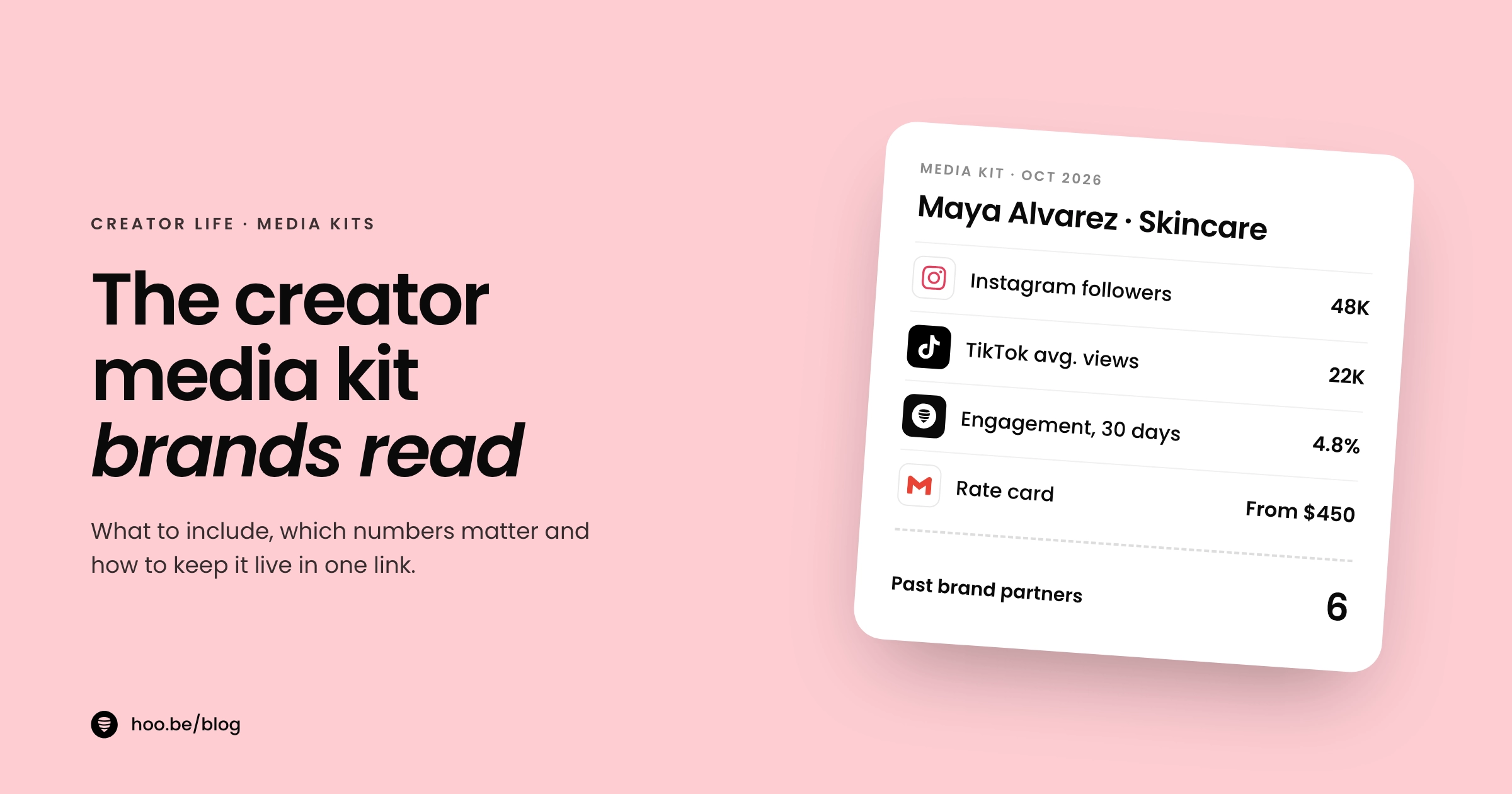
A creator media kit is a one or two page summary that tells a brand who you are, who watches you, what your content does and how to hire you. The best ones answer a brand's first five questions in under a minute: what is your niche, who is your audience, how engaged are they, what have you made before, and how do I book you.
You do not need a big following to need one. Brands are moving money toward smaller creators, and they are getting stricter about proof. In Influencer Marketing Hub's 2026 benchmark survey, more than half of brands plan to expand work with nano and micro creators, and fake or bot followers were the single biggest quality problem they reported. A clear, honest media kit is how you get through that filter.
This guide covers exactly what to put in your media kit in 2026, which numbers matter, whether to include rates, how to build one step by step, and whether to send a PDF, a link or both.
Key takeaways
- A media kit should fit on one or two pages: intro, audience, engagement, best work, services and contact.
- Lead with your niche and your engagement rate, not your follower count. Smaller creators usually win on engagement.
- Use real screenshots from your platform analytics. Fake or bot followers are the top fraud issue brands report.
- Share "starting at" prices or a separate rate card, so you can quote each deal on its scope and usage rights.
- Pair a PDF with a live link that you can update weekly, so brands always see your current numbers and work.
What is a creator media kit?
A media kit is your sales sheet as a creator. A brand manager or agency uses it to decide, quickly, whether you fit a campaign and what you will cost. It is not a CV and it is not a portfolio of everything you have ever posted. It is a short, curated case for working with you.
Brands look at a lot of creators. In the same Influencer Marketing Hub survey, two thirds of respondents run influencer marketing entirely in-house, which usually means one or two people vetting dozens of profiles. A media kit that puts the right facts in the right order saves them time, and that alone makes you easier to say yes to.
Those three numbers explain the job your media kit has to do. Brands want more small creators, they have more money for them, and they are worried about fake audiences. Show them a real, engaged audience that matches their customer, and you are already ahead of most pitches in their inbox.

What should a media kit include?
Keep it to six sections. Each one answers a question a brand will ask anyway, so you might as well answer it before they do.
| Section | What to show | Where to get it |
|---|---|---|
| Intro | Photo, name, handle, one line on what you make and who it is for | Write it yourself, under 40 words |
| Audience | Followers per platform, top countries or cities, age range, gender split |  Instagram Insights,  TikTok Analytics,  YouTube Studio |
| Performance | Engagement rate, average views or reach per post, saves and shares | Your last 30 days of native analytics |
| Best work | 3 to 6 examples, ideally with the result (views, clicks, sales, code uses) | Past collaborations, or your strongest organic posts |
| Services | Formats you offer: Reels, TikToks, YouTube integrations, Stories, UGC, usage rights | Your rate card |
| Contact | Business email, a booking or inquiry link, your link in bio | A dedicated work email, never your personal one |
The intro: one sentence that sells
Your intro should name your niche and your audience in a single line. "I make 30-second skincare routines for women in their 30s with sensitive skin" tells a brand far more than "lifestyle creator and coffee lover." If you have one standout credential, such as a qualification, a viral series or a well-known past partner, put it here.
The audience section: match their customer
Brands buy audiences, not follower counts. Show the split that matters to the kind of brand you want: age range, top countries or cities, and gender. If 70% of your audience is in the US and the brand only ships to the US, say so. If your audience skews to one city, that is a selling point for local brands and events.
Best work: results beat aesthetics
Pick three to six examples and add one line of proof under each: views, link clicks, saves, or the number of people who used your code. If you have not done paid work yet, use your best organic posts and frame them as "this is what I would make for you." Our guide to turning your link in bio into a portfolio shows how to display samples so brands can watch them in one tap.
Which numbers should you put in a media kit?
Lead with engagement rate. It tells a brand how many people actually react to what you post, and it is the number where small creators beat everyone else. Follower count goes in too, but it is context, not the headline.
Engagement rate is usually calculated per post as interactions divided by followers, multiplied by 100. Socialinsider, which publishes widely used benchmarks, counts likes and comments on Instagram, and likes, comments, shares and saves on TikTok. Use the same formula across your platforms and say which one you used, so a brand can compare like with like.
Average engagement rate per post
The gap is the point. A nano creator on TikTok often gets several times the engagement of a brand's own account. If your rate is above these benchmarks, put it on the first page of your kit and name the benchmark next to it.
Numbers that help, and numbers that hurt
- Include: engagement rate, average views per video (last 30 days), reach, saves and shares, audience location and age, link clicks from your bio.
- Include if strong: story views, average watch time, email list size, past campaign results.
- Leave out: lifetime totals that hide a recent drop, single viral outliers presented as averages, and any number you cannot back up with a screenshot.
Pro tip
Add a small "as of" date under your numbers, and keep the original analytics screenshots in a folder. When a brand asks for proof, and many do now, you can send them in a minute. It quietly signals that your audience is real.
Should you put your rates in your media kit?
Usually not as a fixed price list. Rates depend on the format, the number of deliverables, the timeline and, above all, how the brand wants to use the content afterward. A fixed number in a PDF can undercut you on a deal that includes paid ad usage or exclusivity.
The better approach is one of these two:
- "Starting at" prices for each format, such as "Reels from $X," with a line saying usage rights and exclusivity are quoted separately.
- A separate rate card you send once a brand shows interest, tailored to the brief.
To set those numbers, use current market data. Lumanu's analysis of $420 million in creator payments found an average of $1,429 per Instagram deal, $2,049 on TikTok and $2,228 on YouTube, with Instagram Reels averaging $3,618. Those averages include big creators, so tier data is more useful when you are starting out. Nowadays Media's 2026 Instagram rates, based on more than $17 million in placed spend, look like this:
| Tier | Followers | Feed post | Reel | Story |
|---|---|---|---|---|
| Nano | 1K to 10K | $25 to $150 | $50 to $300 | $15 to $75 |
| Micro | 10K to 100K | $150 to $500 | $300 to $800 | $50 to $250 |
| Mid | 100K to 500K | $500 to $2,500 | $800 to $5,000 | $200 to $800 |
Source: Nowadays Media, Instagram Influencer Rates 2026. Usage rights, exclusivity and whitelisting add 30% to 200% on top.
If you also sell user-generated content, list it as its own service. UGC is priced on production, not audience, so it follows different rules. Our UGC rates guide covers that, and negotiating usage rights explains how to price ad usage without leaving money on the table.
How do you make a media kit? Step by step

- Pull your last 30 days of analytics. Screenshot audience demographics, reach, views and engagement from each platform's native tools. Save them in one dated folder.
- Calculate your engagement rate. Use the same formula on every platform, and note it in small text under the number.
- Choose 3 to 6 examples. Pick work that matches the brands you want next, and add one result under each.
- Write your intro and services. One line on who you are and who you serve, then a short list of what you offer.
- Design one clean page. Use a simple template with your colors, a clear photo and plenty of white space. Export it as a PDF under 5 MB so it sends easily.
- Publish a live version. Put the same information on a page you can update, and link it from your bio and email signature.
- Set a monthly reminder. Refresh your numbers and swap in new work on the first of each month.
PDF or link: which media kit format works best?
Both, for different moments. A PDF is what a brand forwards to a colleague or attaches to a campaign brief. A link is what you put in your bio and your pitch emails, because it is always current. Here is how the common options compare.
| Format | Best for | Watch out for |
|---|---|---|
| Designed PDF | Attaching to pitch emails, agency rosters, forwarding inside a brand | Goes stale the moment your numbers change; you have to resend it |
 Beacons media kit | Auto-updating audience and engagement data; included on Beacons' free plan | Lives on Beacons; check which extras need a paid plan |
 hoo.be page | A live portfolio: embedded TikToks, Reels and YouTube videos, a contact form, and links to your PDF and rate card | Brand-facing stats still come from your platform screenshots or PDF |
Beacons features from its pricing page, October 2026.
Whatever you choose, make the path from "interested" to "in touch" short. A brand that likes your work should be one tap away from a contact form or your business email.
What does a good media kit look like for different creators?
The six sections stay the same. What you lead with changes with your niche and what brands in that niche buy.
Beauty and skincare creators
Lead with tutorial and routine content, close-up product shots and any results from discount codes or affiliate links. Beauty brands care about skin type, age and location, so put that audience split up front. See our link in bio setup for beauty creators for how to pair it with your shop links.
Fitness and wellness creators
Lead with your training style and audience goals, and show examples where people followed your program or used your code. Average views on your workout videos often matter more than follower count.
UGC creators with a small audience
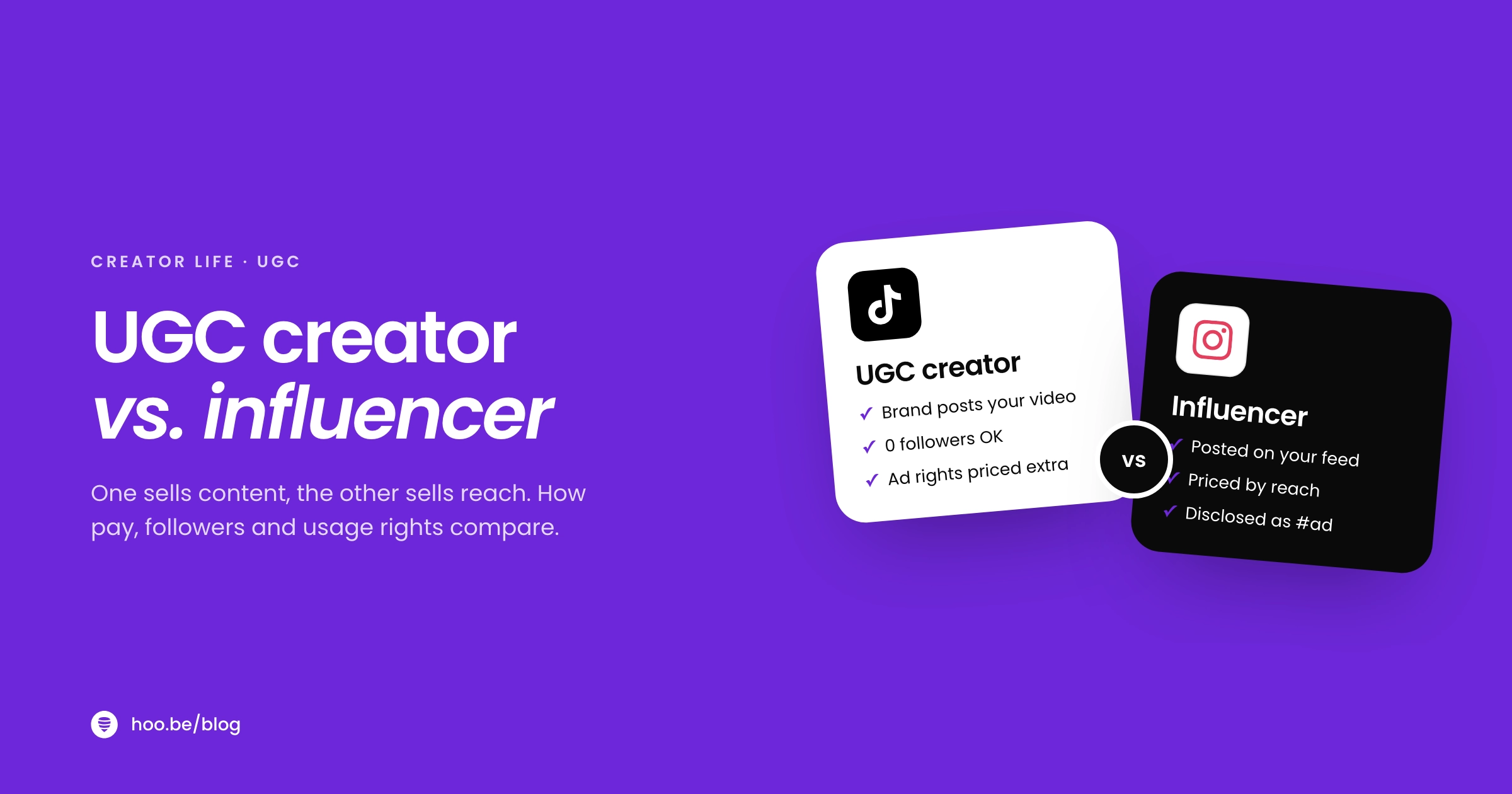
Your kit is a portfolio first. Replace the audience section with a services list (formats, video lengths, hooks, raw footage) and show your best three ads. Brands are buying your production, not your reach. Our UGC creator vs influencer guide explains the difference.
Musicians, podcasters and YouTubers
Lead with listens, downloads or average views per video, and the audience's location. Add upcoming release or tour dates if a brand could sponsor around them.
What are the most common media kit mistakes?
- Too long. Ten pages of photos and backstory. Keep it to one or two.
- Stale numbers. A kit from last year with last year's follower count. Date your stats and refresh monthly.
- No proof. Claims with no screenshots and no results under your examples.
- Vanity over fit. Total followers up top, audience location buried at the end.
- Hard to contact. No business email, or a contact page that takes three taps to find.
- Missing disclosure history. If past sponsored posts were not labelled, fix that habit now. The FTC expects clear disclosure on every paid or gifted post, and brands notice.
How do you send your media kit to brands?
Do not lead with the attachment. Lead with a short, specific pitch: one line on why you fit this brand, one idea for content, and one proof point. Then link your live media kit and attach the PDF. Our brand pitch email templates give you wording that works, and how to land your first brand deal covers who to pitch first.

Keep your kit honest
Never round your numbers up or show a single viral post as your average. Brands increasingly check audiences with third-party tools, and a mismatch ends the conversation. An honest kit with smaller numbers wins more repeat work than an inflated one.
Give brands one live link
A PDF is a snapshot. Your link in bio is the version of your media kit that is always up to date, and it is already where brands look first when they find you on Instagram or TikTok.
A brand-ready page does a few simple things: it shows your best content playing in place, it links your PDF media kit and rate card, it makes contacting you a single tap, and it shows what you are working on now. For more ideas, see what to add to your link in bio.
Turn your link in bio into a live media kit
On hoo.be you can embed your best TikToks, Reels and YouTube videos, add a contact form for brand inquiries and export the replies to CSV, and link your PDF media kit and rate card in one place. Pro adds advanced analytics and custom SEO, and Premium adds custom domains. Start free at hoo.be.
Create your hoo.be pageFrequently asked questions
What should be included in a creator media kit?
Six sections: a short intro with your niche, your audience demographics, performance numbers such as engagement rate and average views, three to six examples of your best work with results, the services you offer, and your business contact details. Keep it to one or two pages.
Do I need a media kit if I have a small following?
Yes. More than half of brands plan to expand work with nano and micro creators in 2026, according to Influencer Marketing Hub. Small creators often have higher engagement than larger accounts, and a media kit is where you make that case clearly.
Should I include my rates in my media kit?
Use "starting at" prices or send a separate rate card instead of a fixed list. Final pricing depends on the number of deliverables, the timeline, usage rights and exclusivity, which can add 30% to 200% to a base rate.
How do I calculate my engagement rate for a media kit?
For each post, add up the interactions (likes and comments, plus shares and saves on TikTok), divide by your follower count and multiply by 100. Average it across your recent posts, use the same method on every platform, and note the method under the number.
Should my media kit be a PDF or a link?
Both. A PDF is easy to attach and forward inside a brand. A live link in your bio and email signature stays current without resending files. Use the link in pitches and attach the PDF as a backup.
How often should I update my media kit?
Once a month, and before any big pitch. Refresh your numbers, add an "as of" date, and swap in your newest and most relevant work.
How long should a media kit be?
One page is ideal and two is the maximum. Brand managers review many creators, so put your niche, audience fit and engagement on the first page, where they will see it in seconds.
Sources
- Influencer Marketing Hub, Influencer Marketing Benchmark Report 2026 (May 2026)
- HypeAuditor, State of Influencer Marketing 2025
- Socialinsider, Social Media Benchmarks 2026
- Lumanu, creator payout analysis (Sep 2026)
- Nowadays Media, Instagram Influencer Rates 2026 (Jun 2026)
- Instagram for Creators, Understand Instagram Insights
- Beacons, pricing and plans
- FTC, Disclosures 101 for Social Media Influencers