In this article
- What should a coach put in their link in bio?
- Why does a link in bio matter so much for coaches?
- How do you get more discovery calls from your link in bio?
- How should coaches present packages and pricing?
- How do you use testimonials without breaking FTC rules?
- What free resource should a coach offer?
- How do you set up a coaching link in bio, step by step?
- How do you know if your link in bio is working?
- Build your coaching link in bio on hoo.be
- Frequently asked questions
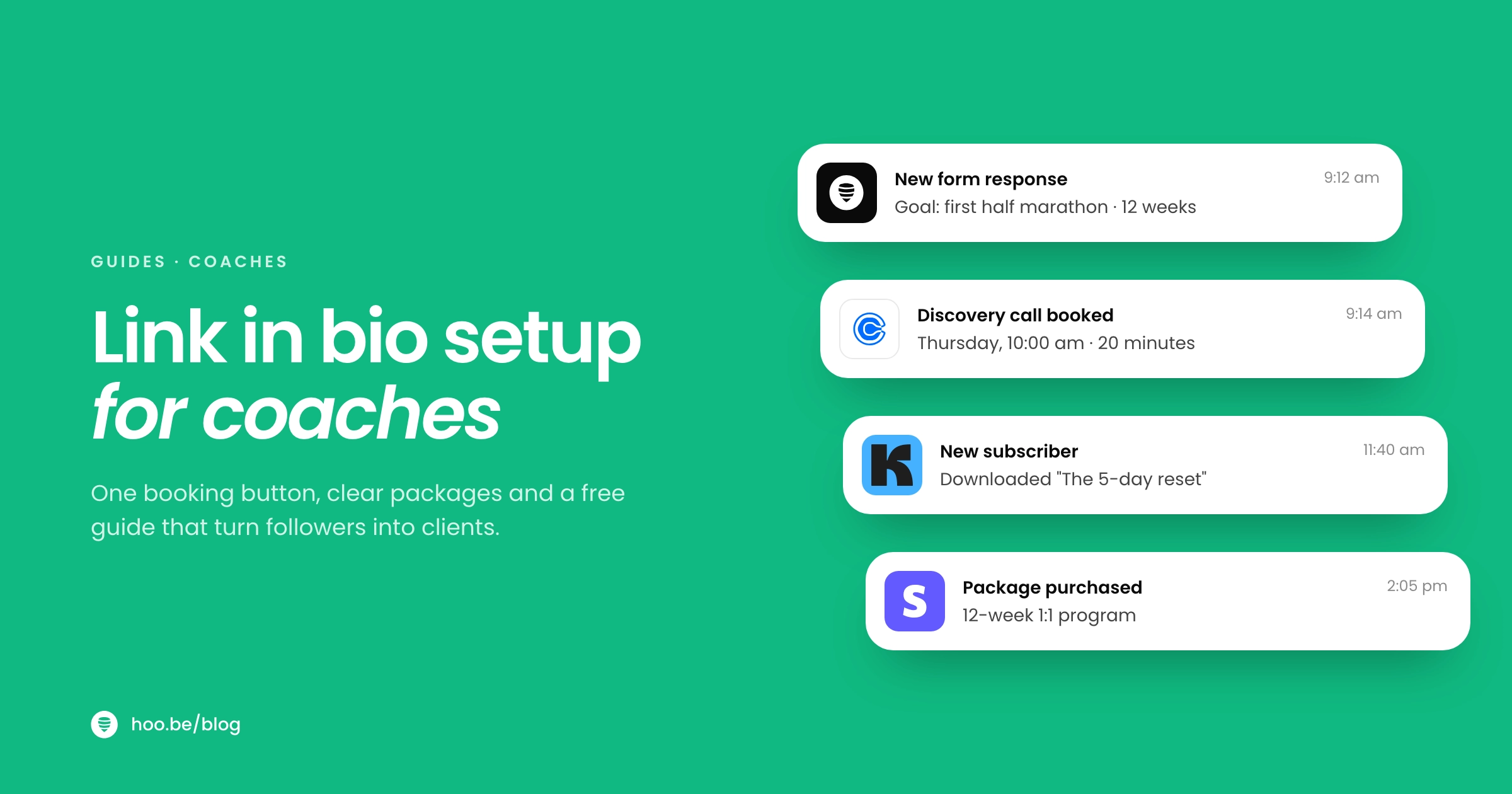
The best link in bio setup for coaches has one main job: turn an interested follower into a booked discovery call. Put a single "book a free call" button at the top, then your coaching packages, proof that you get results, a free resource for people who are not ready yet, and a contact option for partnerships. Everything on the page should lead toward that first conversation.
It works the same whether you coach fitness, careers, leadership, business or life transitions. A potential client usually finds you through a short video, a post or a podcast clip. They tap your profile once to see if you are the right fit. If the next step is unclear, they scroll on.
This guide covers what to include, how to set up booking so it does not leak clients, how to present packages and testimonials (including the FTC rules on results claims), and how to build the page step by step.
Key takeaways
- Lead with one call to action: book a call. Every extra choice at the top of the page splits attention.
- Pre-qualify with a short form so your calendar fills with good-fit clients, not tire-kickers.
- Show two or three clear packages with who each is for. Clarity sells before the call does.
- Testimonials build trust, but the FTC requires that results claims reflect what clients generally achieve. "Results not typical" is not enough on its own.
- Offer a free guide or workshop for visitors who are not ready to book, and collect their email.
What should a coach put in their link in bio?
Here is the order that works for most coaches, from the top of the page down:
- Book a free discovery call. One clear button, near the top, with how long the call is.
- Your coaching packages. One-to-one, group and self-paced options, each with who it is for.
- Proof. Short client testimonials, a case study or a featured talk or interview.
- A free resource. A guide, checklist, mini course or workshop in exchange for an email address.
- Your latest content. An embedded video, newsletter or podcast episode so visitors can see how you think.
- Contact for partnerships. Speaking, workshops, corporate programs and collaborations.
- Social icons. At the bottom.
If you have been sending followers straight to a full website, read our comparison of link in bio pages and landing pages. For most coaches, a focused link in bio page converts social traffic better because it is built for phones and for one next step.
Why does a link in bio matter so much for coaches?
Coaching is a trust business, and it has become a crowded one. The International Coaching Federation's 2025 Global Coaching Study, based on more than 10,000 responses from 127 countries, found a record number of coaches and a profession that is getting more professional.
More coaches means a potential client is comparing you with several others, often within the same scroll. Your link in bio is where that comparison happens. Credentials, a clear offer and real client stories all need to be visible in seconds.
Income also climbs steeply with experience, partly because experienced coaches shift from self-funded clients toward clients whose organizations pay:
Average annual coaching revenue by experience
You cannot shortcut experience, but you can make your client pipeline work like an established coach's from day one. That starts with a page that books calls while you are coaching.

How do you get more discovery calls from your link in bio?
Make booking the easiest thing on the page. That means a scheduling tool, a clear button and, ideally, a short qualifying step.
Use a real scheduling link
"DM me to book" adds a back-and-forth that loses people. A scheduling link lets a visitor pick a time on the spot. Here is how two popular tools compare on their entry plans.
| Tool | Free plan | Paid plans | Taking payment for sessions |
|---|---|---|---|
 Calendly | One event type, one calendar connection | Standard from $10 per seat per month, billed yearly | Stripe and PayPal on paid plans |
 Cal.com | One user, unlimited event types and calendars | Teams from $12 per user per month, billed yearly | Stripe and PayPal on the free plan |
Sources: Calendly and Cal.com pricing pages, October 2026. Check each for current terms.
If you only offer a free discovery call, either free plan works. If you want separate event types for discovery calls, paid sessions and follow-ups, compare the limits carefully. Our roundup of Calendly alternatives covers more options.
Pre-qualify before the call
A short form in front of your calendar saves you hours of calls with people who are not a fit. Ask three or four questions at most: what they want help with, their timeline, their budget range and how they found you. Send good-fit answers to your booking link and everyone else to your free resource.
Say what happens on the call
"Book a free 20-minute call: we'll map your next 90 days and see if coaching is right for you" tells visitors exactly what they are signing up for. That removes the fear of a hard sell, which a bare "Book now" button does not.
Pro tip
Put the booking button in two places: at the top of the page and again directly under your testimonials. Visitors who have just read your client stories are often ready to act, so give them the button right there instead of making them scroll back up.
How should coaches present packages and pricing?
A clear offer does a lot of selling before a client ever talks to you. Visitors want to know three things: what you do, who it is for, and roughly what it involves.
- Limit it to two or three options. For example: a one-to-one program, a group program and a self-paced course.
- Lead with the outcome. "12 weeks to your first half marathon" says more than "Running coaching package."
- Say who it is for. "For first-time managers in tech" helps the right person recognize themselves.
- Decide how open to be about price. Showing a starting price filters out people who cannot afford it. If you prefer to discuss price on the call, say "Programmes from 3 months" so visitors know the scale.
- Give each package its own next step. Book a call for high-touch programs, buy now for courses and workshops.
Your packages should sound like you. Our guide on building a personal brand people remember helps you find the words.
How do you use testimonials without breaking FTC rules?
Client stories are the strongest trust signal a coach has, especially for visitors who found you through one short video. They also come with rules, particularly when they describe results like weight lost, income earned or promotions won.
- Use real testimonials only. The FTC's 2024 rule on reviews and testimonials bans fake testimonials, including AI-generated ones and testimonials from people who never used the service. The FTC can seek civil penalties against knowing violators.
- Be careful with exceptional results. Under the FTC's Endorsement Guides, if a testimonial shows results most clients would not get, you need to make clear what clients generally achieve. A "results not typical" line is not enough on its own.
- Get permission. Ask clients before you quote them, and let them choose how they are named.
- Disclose incentives. If a client got a discount or free session in exchange for a review, say so.
Watch out
Fitness, wealth and business coaches are most exposed here. A testimonial like "I made $50,000 in my first month" implies other clients will too. Pair outcome stories with what a typical client experiences, or focus testimonials on the process and how coaching felt.

What free resource should a coach offer?
Most visitors are not ready to book on their first visit. A free resource gives them a smaller first step and gives you a way to stay in touch. Good options for coaches:
- A one-page checklist or worksheet that solves one specific problem, such as "The 5-question career reset."
- A short email course that delivers one lesson a day for five days.
- A free live workshop once a month. It doubles as a sales conversation with a room full of warm leads.
- A newsletter with one useful idea a week.
Keep the signup form to an email address and first name. Fewer fields means less friction. Our guide to building an email list from your link in bio has more ideas.
How do you set up a coaching link in bio, step by step?
- Choose your one main action. For most coaches, it is a free discovery call. Write the button text and one line about what happens on the call.
- Set up your scheduling link. Create the discovery call event in your booking tool with buffer time and a limit on calls per day.
- Build a short qualifying form. Three or four questions, then send good-fit leads to the booking link.
- Write your packages. Two or three, each with an outcome, who it is for and a next step.
- Collect and check testimonials. Get permission, keep them short and make sure results claims are typical or explained.
- Create your free resource. One checklist, guide or workshop, with a simple email signup.
- Add your best content. Embed one video or newsletter that shows how you coach.
- Use the link everywhere. Instagram (as your first bio link), TikTok, LinkedIn, YouTube, your email signature and podcast show notes.
- Review monthly. Check clicks on the booking button, form completions and which platforms send visitors.
How do you know if your link in bio is working?
Track the path from visit to booked call. Your link in bio analytics show visits and clicks. Your booking tool shows calls booked. Your notes after each call show who became a client.
- Visit to click: if few people tap "book a call," your button text or offer is unclear.
- Click to booking: if people click but do not book, your calendar may have too few slots or too many steps.
- Booking to client: if calls do not convert, tighten the qualifying form or the package descriptions.
- Traffic sources: double down on the platform that sends visitors who book.
Running ads? Add a tracking pixel so you can retarget visitors who looked but did not book. Run a monthly link in bio audit and check our list of common link in bio mistakes to catch problems early.
Build your coaching link in bio on hoo.be
hoo.be gives coaches the pieces this guide describes. Link blocks hold your booking button. Forms support text, email, phone, select, yes/no and address fields, which is enough for a qualifying questionnaire, and Contact collection captures email signups for your free resource. Responses and contacts export to CSV.
You can embed YouTube, Vimeo or Loom videos and a Substack latest-post card or signup form. Product blocks show a package with a price and a shop button, and Tips take one-off support through Stripe. For tracking, add a Facebook Pixel, TikTok Pixel or Google Analytics ID. Pro adds custom SEO and advanced analytics, and Premium adds custom domains.
A page that books your next client
Build a coaching page on hoo.be with a booking button, a qualifying form, your packages, testimonials and an email signup. Start on the Free plan and see hoo.be/pricing for Pro and Premium.
Claim your hoo.beFrequently asked questions
What is the best link in bio setup for coaches?
Put a single "book a free call" button at the top, followed by two or three clear coaching packages, short client testimonials, a free resource with an email signup, your latest content and a contact option for partnerships. Social icons go at the bottom.
Should coaches put prices in their link in bio?
It depends on your offer. Showing a starting price filters out people who cannot afford it and saves calls. If you prefer to discuss price on the call, give a sense of scale instead, such as program length, so visitors know what to expect.
What booking tool should coaches use?
Calendly and Cal.com are two popular options. Calendly's free plan includes one event type, with payments on paid plans from $10 per seat per month billed yearly. Cal.com's free plan includes unlimited event types and accepts Stripe and PayPal payments.
Can coaches use client results in testimonials?
Yes, if they are real and not misleading. Under the FTC's Endorsement Guides, if a testimonial shows results most clients would not get, you must make clear what clients generally achieve. A "results not typical" disclaimer alone is not enough, and fake or AI-generated testimonials are banned.
How do coaches get clients from Instagram?
Post content that shows how you think and the problems you solve, then point every post to one clear next step in your bio: a free discovery call or a free resource. Instagram shows only your first bio link on your profile, so make it the page with your booking button.
What is a good lead magnet for a coach?
Something small that solves one specific problem quickly: a one-page checklist, a five-day email course, a monthly free workshop or a weekly newsletter. Ask only for a first name and email address.
How many coaches are there worldwide?
The ICF's 2025 Global Coaching Study estimates a record 122,974 coach practitioners worldwide, generating about $5.34 billion in annual revenue. The study drew on more than 10,000 responses from 127 countries.
Sources
- International Coaching Federation, 2025 Global Coaching Study
- Erickson Coaching International, The state of the coaching profession (Feb 2026)
- ICA, What the 2025 ICF Global Coaching Study means for your career
- Calendly, Pricing
- Cal.com, Pricing
- FTC, Final rule banning fake reviews and testimonials (Aug 2024)
- FTC, Endorsement Guides: What people are asking
- Social Media Today, Instagram adds up to 5 links in profile bio (Apr 2023)